Services
Therapy and counseling services for adults, focused on anxiety, trauma, burnout, and performance challenges via secure telehealth sessions.
Dr. Jackson's Therapy Style
Broadly, I am trained in and practice from the framework of Cognitive Behavioral Therapy (CBT). This approach is supported by decades of academic and clinical research conducted by psychologists and clinicians around the world. At its core, CBT focuses on identifying and modifying patterns in thinking and behavior as a way to improve emotional well-being. Recognizing the connections between thoughts, behaviors, and emotions is central to this work.
In addition, I incorporate elements of Acceptance and Commitment Therapy (ACT). This often includes mindfulness-based strategies, as well as helping clients develop the ability to accept aspects of life that cannot be changed while still moving toward what matters to them. While there is some debate within the field as to whether ACT is best understood as a form of CBT or a distinct approach, my focus is on working collaboratively to determine what is most effective for each individual client.
In practice, I tend to work with adults who are navigating stress, anxiety, burnout, or other challenges that can arise in demanding personal or professional lives. My style is best described as empathetic, collaborative, and nonjudgmental. I place a strong emphasis on building a genuine human connection, as a solid therapeutic relationship is often the foundation for meaningful progress.
From there, I integrate evidence-based strategies in a way that is practical and tailored to your life. Therapy is not intended to be abstract or disconnected from day-to-day experience. Instead, the goal is to work together to apply these tools in a way that supports your goals, improves overall well-being, and leads to lasting change.
Virtual Therapy
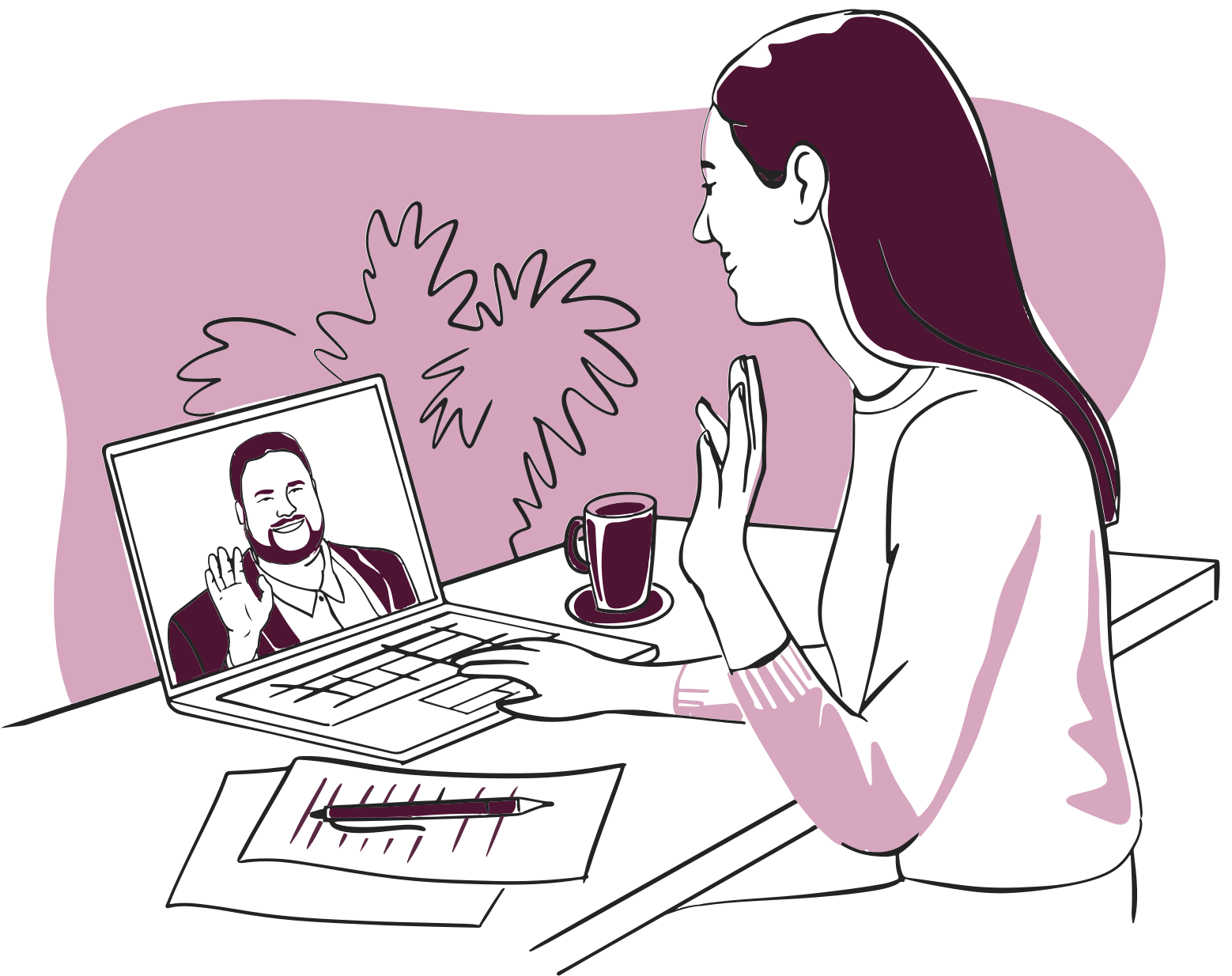
Connect Talk Therapy was created with the purpose of providing high-quality virtual therapy while maintaining the level of human connection that is both desired and necessary for therapy to have a meaningful impact. As such, I have designed my practice to make managing your appointments, attending sessions, and engaging in therapy as convenient and seamless as possible.
As a fully virtual practice serving clients across Arizona, including Scottsdale, Paradise Valley, Chandler, Gilbert, and the greater Phoenix area, therapy is designed to fit into your life. Clients have access to an easy-to-use online portal where they can send secure messages, view upcoming appointments, and manage billing in one place.
In addition, I prioritize strong video and audio quality to ensure that sessions feel clear, consistent, and personal. The goal is to create an experience that closely mirrors the feel of sitting together in a comfortable, private office setting.
Put simply, it is my goal to ensure that you can connect to care, anywhere.
Please note that I work exclusively with individual adult clients. I do not provide couples counseling or group therapy. I am, however, open to occasional conjoint sessions when clinically appropriate, such as inviting an important person in your life to join a session for a specific and focused purpose.
The problems I treat include:
Anxiety, including work-related stress and social anxiety
Anxiety can take many forms, including work-related stress, social anxiety, and a more general sense of persistent worry. Whether you have recently taken on increased responsibility at work and are feeling overwhelmed, are struggling to manage a demanding schedule, or have noticed yourself becoming more preoccupied with worry, therapy can be a valuable resource for learning how to manage anxiety more effectively.
In our work together, we will identify clear treatment goals, better understand the specific challenges you are facing, and just as importantly, recognize your strengths. From there, we will take a collaborative, structured approach to help you make meaningful progress. As anxiety becomes more manageable, many clients notice improvements in other areas of life as well, such as work performance, decision-making, and relationships.
Social anxiety is a common and often highly impactful form of anxiety. It can make situations such as meeting new people, speaking in groups, or performing in professional settings feel overwhelming or even debilitating. Part of the therapeutic process involves identifying the specific type of anxiety you are experiencing and tailoring treatment accordingly.
If social anxiety is a primary concern, we can work together to better understand how it shows up in your life and develop targeted strategies to address it. Therapy is not one-size-fits-all, and treatment is always adapted to fit your specific goals, circumstances, and values.
If you are unsure whether therapy for anxiety would be helpful, you are welcome to request a free consultation to discuss your situation in more detail.
Depression
Alongside anxiety, depression is one of the most common reasons people seek therapy. It can take many forms, ranging from a persistent sense of sadness or emptiness to a loss of energy and motivation that makes even routine daily tasks feel overwhelming.
Depression can also be isolating. Many people find themselves feeling disconnected, discouraged, or unsure of how to begin making changes. Therapy can provide a structured and supportive space to begin addressing these challenges.
In our work together, the focus is on identifying practical and meaningful ways to improve mood and overall functioning. This often involves examining patterns in thinking, behavior, and daily routine, and making gradual, targeted changes that help build momentum over time.
I take a collaborative and individualized approach to this process. Rather than applying a one-size-fits-all model, we will work together to better understand what is contributing to your experience of depression and determine what strategies are most likely to be effective for you.
The goal is not only to reduce symptoms of depression, but also to help you regain a sense of energy, engagement, and direction in your day-to-day life.
Trauma
People often hear the term trauma and assume it only refers to the most severe experiences. While some individuals do face significant and life-altering trauma, it is important to recognize that trauma exists on a spectrum. Even experiences that may be considered less severe can still have a meaningful and lasting impact on emotional well-being, relationships, and day-to-day functioning.
I have training and experience in helping clients work through a range of traumatic experiences, including situations such as unwanted physical contact in the workplace, car accidents, and distressing or overwhelming medical experiences. These events can lead to lingering stress, anxiety, or changes in how individuals view themselves and the world around them.
For individuals dealing with more complex or severe trauma, referral to a specialist may be the most appropriate course of care. When indicated, I am committed to helping clients connect with the level of support that best fits their needs.
My approach to trauma-focused therapy begins with building a strong therapeutic relationship, so that you feel supported, understood, and engaged in the process. From that foundation, we will work collaboratively to develop a structured and individualized treatment plan, incorporating evidence-based strategies in a way that feels manageable and appropriate.
Because no two people experience trauma in the same way, treatment is always tailored to your specific history, goals, and pace. The overall aim is to help you process these experiences, reduce their ongoing impact, and move forward with a greater sense of stability and control.
Grief
Grief is a natural response to loss, yet it can be one of the most difficult experiences to navigate. Whether you have lost someone important in your life or are adjusting to the loss of a meaningful role, ability, or aspect of your identity, the impact can feel overwhelming and hard to process.
For some individuals, grief can become so intense that it significantly interferes with daily functioning, and specialized care may be appropriate. At the same time, many people are looking for a steady, nonjudgmental, and empathetic space to work through their loss and begin to make sense of what they are experiencing.
I have worked with clients facing a range of grief-related challenges, including the loss of a romantic partner, the aftermath of accidents resulting in changes to physical functioning, and other significant life disruptions. These experiences can affect mood, motivation, relationships, and the ability to engage fully in day-to-day life.
My approach is to support you in honoring what has been lost while also helping you gradually move forward. This process is not about “getting over” grief, but about learning how to carry it in a way that allows for continued meaning, connection, and engagement in your life.
Insomnia / Sleep Problems
Good sleep is essential for overall well-being, yet many people struggle to consistently get the rest they need. Waking up early for work, managing daily responsibilities, or maintaining focus throughout the day can become significantly more difficult when sleep quality is poor.
In some cases, medical conditions may contribute to insomnia or daytime fatigue, and consultation with a medical provider can be an important first step. At the same time, sleep difficulties are often influenced by psychological and behavioral factors, which can be effectively addressed in therapy.
For example, sleep may be impacted by stress, anxiety, or depression. In other situations, patterns in thinking about sleep, such as worry about not getting enough rest, can unintentionally make the problem worse. Daily habits and routines can also play a role, sometimes reinforcing cycles of poor sleep without it being immediately obvious.
In our work together, the focus is on identifying the underlying factors contributing to your sleep concerns and developing a structured, individualized plan to address them. This may involve adjusting routines, improving sleep-related habits, and working with the thoughts and behaviors that interfere with rest.
The goal is to help you achieve more consistent, restorative sleep so that you can function more effectively and feel better throughout the day.
Relationship Concerns
Difficulties in relationships, whether with coworkers, friends, or family members, often co-occur with other mental health concerns such as stress, anxiety, or depression. When these challenges arise, they can affect communication, connection, and overall satisfaction in both personal and professional relationships.
As the name Connect Talk Therapy suggests, a central focus of my work is helping clients build stronger, healthier connections with others. In some cases, relationship difficulties improve as we address underlying concerns such as anxiety, work-related stress, or mood. It is common for the way we relate to others to shift when we are not feeling like ourselves.
In other situations, relationship challenges may be more directly tied to patterns in communication, boundaries, or the way time and energy are invested in important relationships. These factors can influence how connected or disconnected you feel from the people around you.
As with all of my work, the process begins with building a strong therapeutic relationship. From there, we will work collaboratively to better understand what is contributing to your relationship concerns and develop a practical, individualized plan for improving them.
Other Concerns
If your situation does not fall into one of the categories above, I may still be able to help. Many individuals seek therapy for concerns that do not fit neatly into a single label, including stress, life transitions, or a general sense that something is not quite right.
If you are unsure whether your concerns are a good fit, you are welcome to request a free consultation to discuss what you would like to work on and determine whether therapy may be helpful.
Ready to start your path to clarity and growth?
Book an online appointment
or contact Dr. Jackson by phone.